
The "Hidden" System Controlling Balance
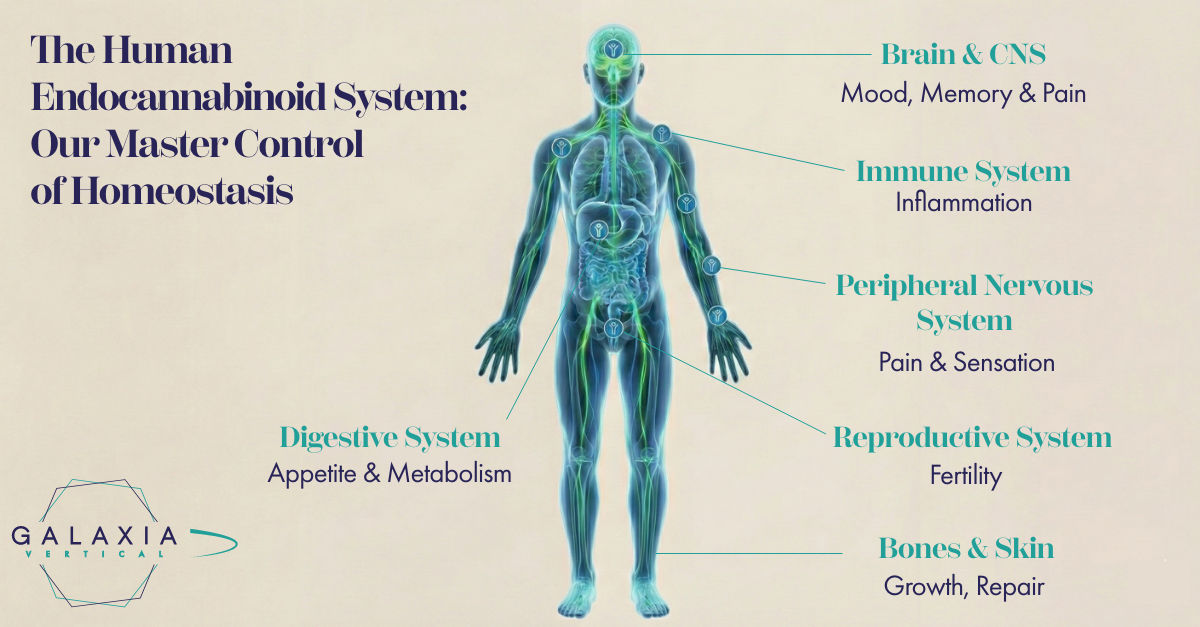
Did you know the human body was wired for cannabis long before we ever heard of the plant?
Biologically, we all possess a "master control system" called the Endocannabinoid System (ECS). Discovered surprisingly recently (in the 1990s), it is now understood to be one of the most vital physiological systems for maintaining human health.
Its primary job is Homeostasis.
Whether it is temperature, mood, pain sensation, or appetite, if something in the body is operating outside of the "Goldilocks zone"—too hot, too cold, too fast, too slow—the ECS activates to correct it.
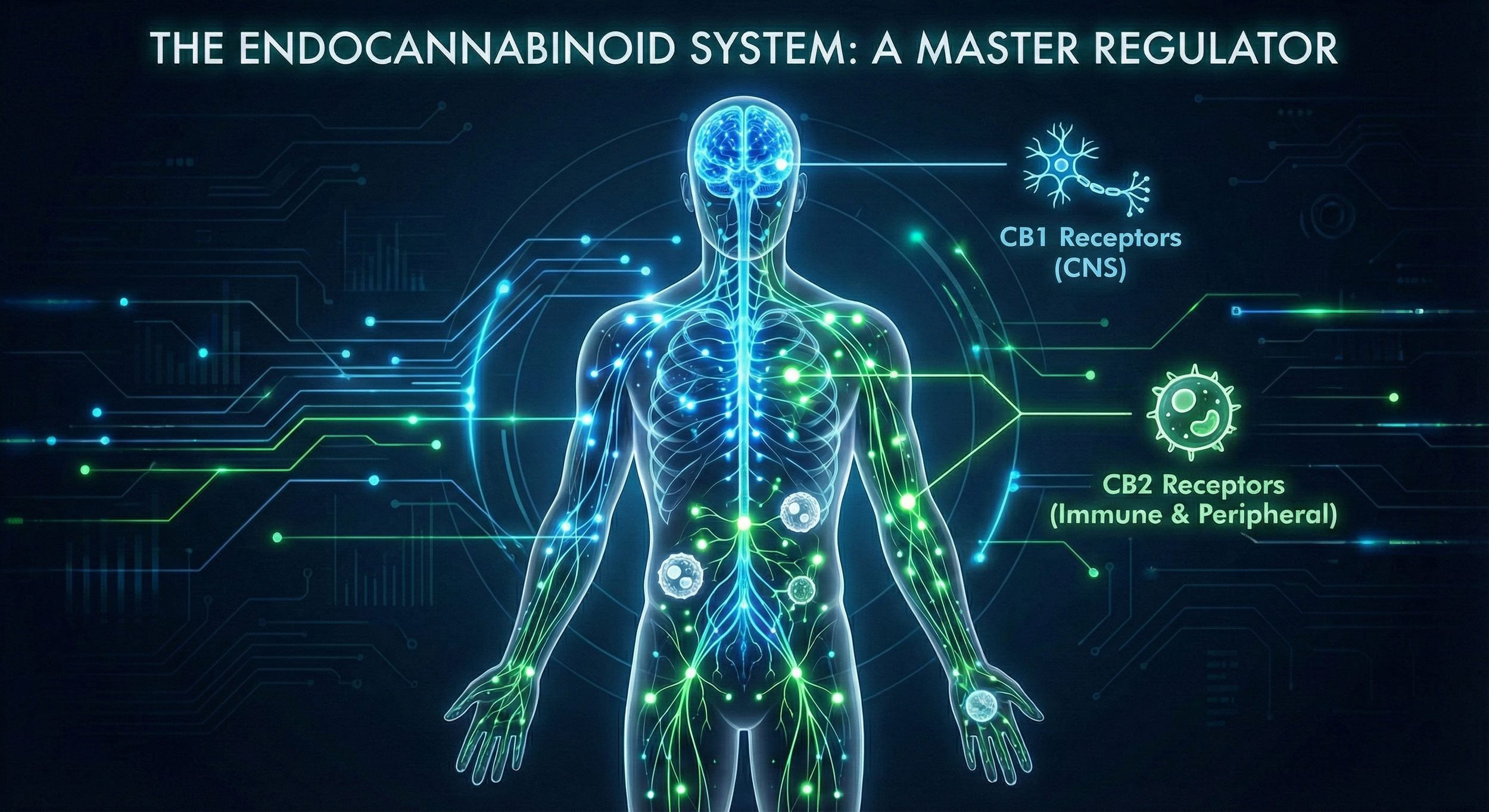
It does this through a vast network of receptors found literally from head to toe. They are split into two main camps:
🧠 CB1 Receptors (the “Headquarters”) Primarily found in the central nervous system.
Brain: Cortex, Hippocampus, Cerebellum.
Spinal Cord.
Target Areas: They largely manage motor activity, thinking, appetite, short-term memory, and pain perception.
🛡️ CB2 Receptors (The “Bodyguard”)Primarily found in the Immune & Peripheral Systems.
Immune Cells: White blood cells.
Organs: Spleen, Tonsils, and Liver.
Gastrointestinal System: The gut lining.
Target Areas: They play a key role in regulating inflammation and the immune response.
Before we talk about CBD or THC, we need to understand the body’s own mechanisms through which these compounds interact. We don’t simply react to these compounds—our bodies are chemically designed to process them.
In our next post: The endocannabinoids that the body naturally produces every day.
Source / Further reading:
NIH: The Endocannabinoid System, Genetically Wired for Health – https://lnkd.in/giUzG6p8