
The "Bliss Molecule" in Your Brain
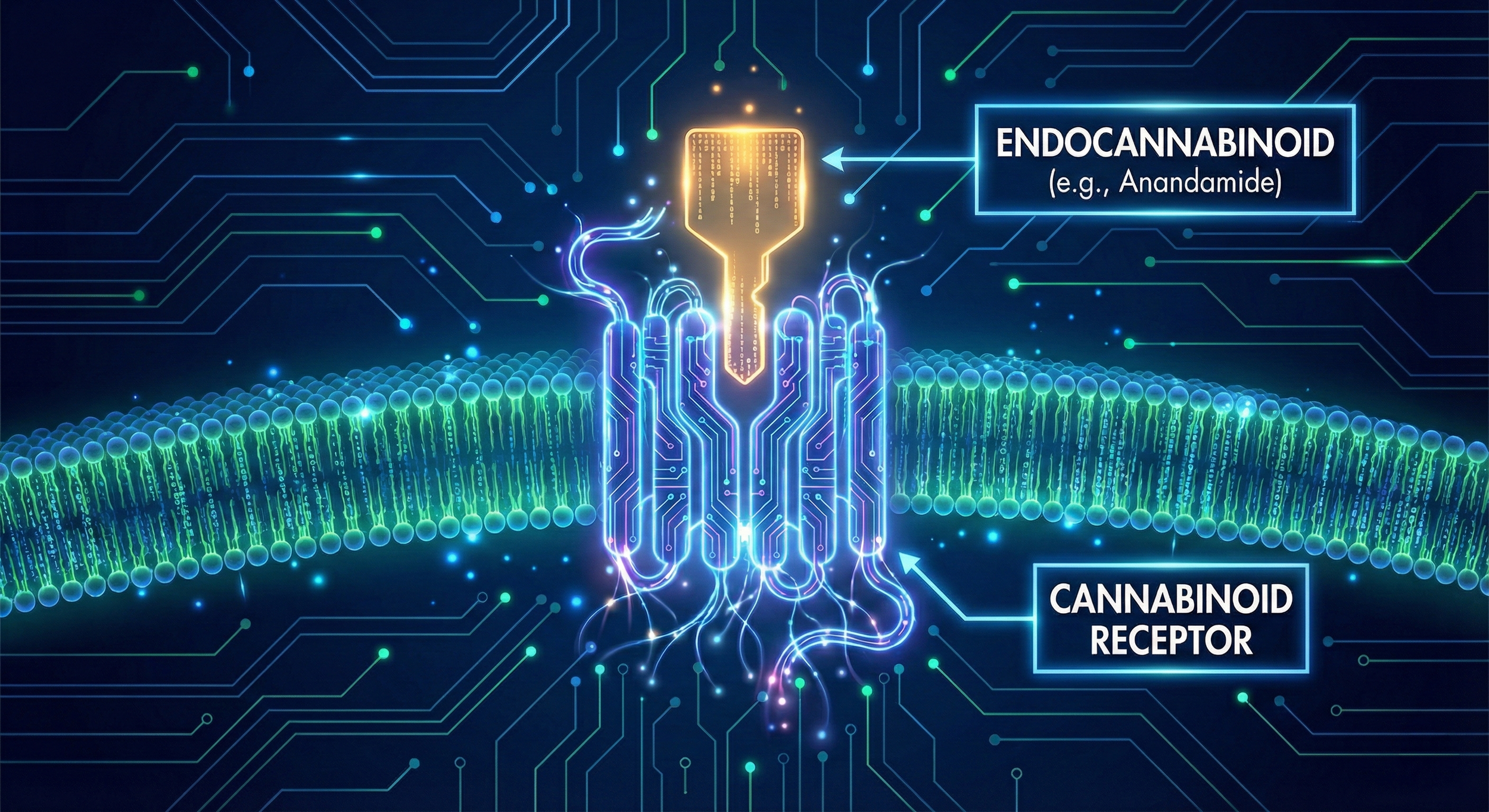
Endogenous Cannabinoids (Anandamide & 2-AG)
The human body produces its own cannabinoids.
While the cannabis plant produces Phytocannabinoids (like THC and CBD), our bodies produce Endocannabinoids. The two most important ones are:
1. Anandamide (The “Bliss Molecule”) Named after the Sanskrit word for bliss ("Ananda"), this molecule regulates feelings of happiness, fear, and even the "runner’s high" you get after exercise.
2. 2-AG (2-arachidonoylglycerol) This is the workhorse of the system, managing appetite, immune system function, and pain management.
How they work: Think of nerve cells as busy traffic intersections. Sometimes the signals get too loud (chronic pain, anxiety, inflammation). Endocannabinoids act like traffic controllers; they travel backward across the nerve gap to tell the sending nerve to "quiet down."
It’s a brilliant feedback loop designed to keep you calm and balanced. But what happens when we introduce cannabinoids like THC or CBD from outside sources?
This will be explained in more detail in the analysis in the next post.
Source / Further reading:
Harvard Health: The Runner’s High and the Endocannabinoid System – https://www.annualreviews.org/doi/abs/10.1146/annurev-psych-010213-115200