
The Science of Continuity
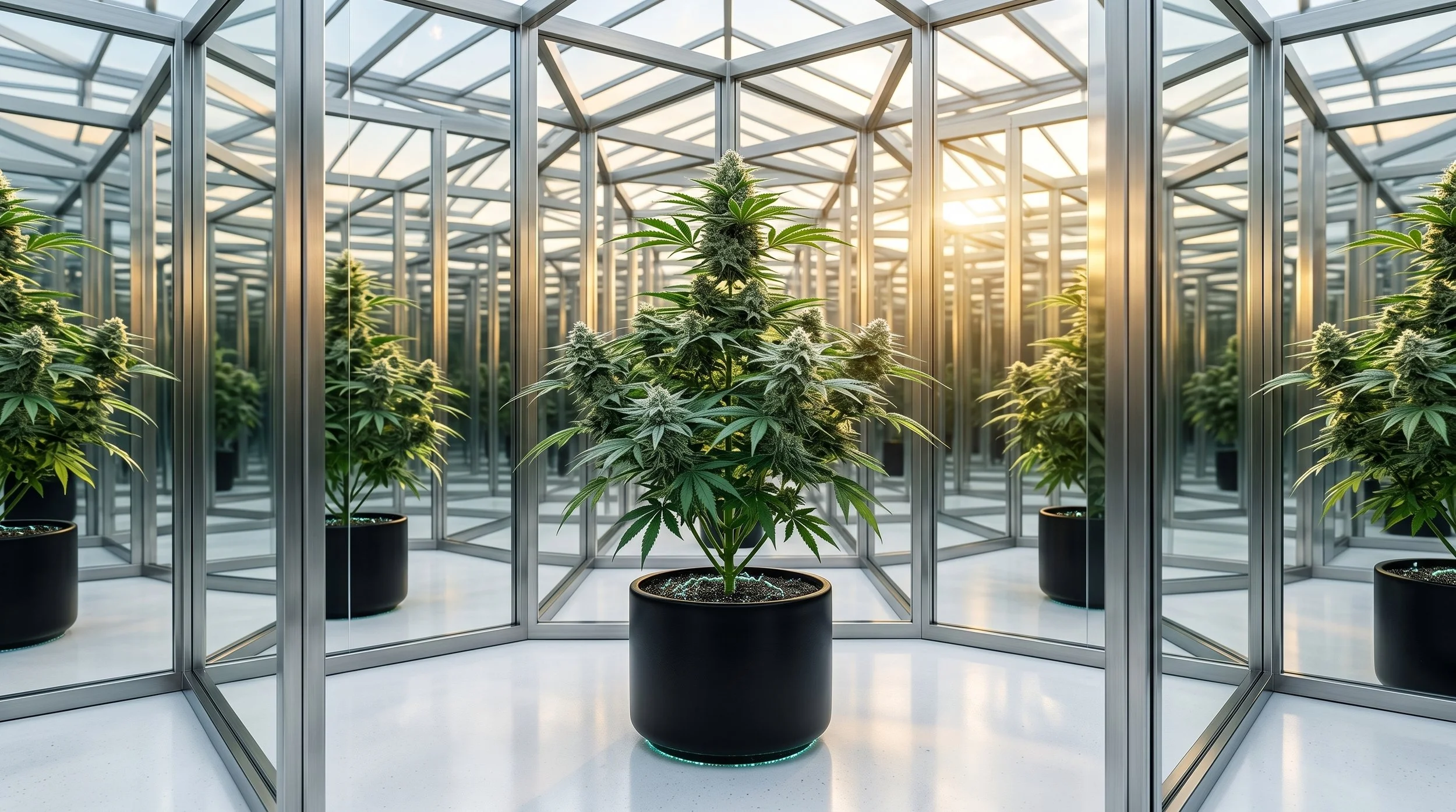
Phenotypic plasticity, environmental modulation, and botanical taxonomy in medical cannabis
Important medical information: This document is provided by Galaxia Life for educational and informational purposes only. It does not constitute medical advice, diagnosis, or a promise of healing (Heilversprechen). Medical cannabis is a prescription medication in Germany. Always consult with a licensed physician regarding your specific medical condition and treatment options. For specific guidance on medication usage, dosing, side effects, or drug interactions, consult a licensed pharmacist.
Summary
In modern healthcare, predictability is a cornerstone of patient care. When a doctor prescribes a treatment regimen or a patient finds a herbal medicine that alleviates chronic symptoms, each subsequent batch is expected to produce an identical therapeutic effect. However, since herbal medicines are derived from living organisms rather than synthetic laboratory compounds, achieving strict consistency poses a complex scientific challenge.
This white paper consolidates the core pillars of herbal stability: the dichotomy between genotype and phenotype, the environmental factors driving "phenotypic drift," the pharmacological necessity of chemotypic alignment, and the regulatory frameworks required to achieve the highest possible level of pharmaceutical standardisation. By bridging traditional agronomy with advanced plant genomics, European healthcare can transition from vague consumer strain names to a precise, reproducible botanical taxonomy.
1. Genotype vs. Phenotype: The Fundamental Equation
To understand why two harvests from the same cultivar line can produce different clinical outcomes, we must look at the foundational law of plant biology:
Genotype (G) + Environment (E) + (G × E) = Phenotype (P)
The Genotype (G): The Inherited Blueprint
The genotype represents the absolute genetic blueprint of the plant—the complete set of inherited instructions stored within its DNA. Determined by parent strain lineages, the genotype acts as an internal recipe book. It dictates the plant's theoretical capacity: its maximum potential resin yield, structural limits, and boundaries for synthesizing cannabinoids (THC, CBD, CBG) and anti-inflammatory terpenes (myrcene, limonene, β-caryophyllene). Possessing a gene, however, does not mean it will physically express. The genotype is purely unexpressed potential.
The Phenotype (P): The Physical and Chemical Reality
The phenotype is the subset of genetic traits that actively manifest in the physical world. It is what can be visually observed, chemically measured, and clinically experienced:
Morphology: Plant height, internode spacing, leaf structure, and stem density.
Organoleptic properties: Distinctive aromas and flavor profiles produced by secondary essential oils.
Chemotype: The exact, final percentage concentrations of active cannabinoids and specific terpene profiles that interact with the human endocannabinoid system (ECS).
The Analogy of the Identical Twins
Consider human identical twins sharing 100% identical DNA (Genotype). If one twin is raised in a coastal environment with an active lifestyle and the other in a high-altitude mountain region with a contrasting diet, their physical stamina, height markers, and metabolic health will diverge.
In plant science, cuttings taken from a single parent plant behave like identical twins. When cultivated in different environments or microclimates, subtle environmental changes turn various genetic switches on or off, resulting in different phenotypes from identical DNA.
2. Historical Development: Landrace Stability vs. Polyhybrid Plasticity
To understand why phenotypic variations in modern medical cannabis are so pronounced, we must examine the plant's evolutionary history:
Geographic Isolation & Landrace Stability: Historically, wild landrace cultivars evolved over centuries in geographic isolation (such as endemic lineages in the Hindu Kush mountains, the Anatolian plateau, or equatorial regions). Through generations of natural selection under stable regional climates, their genotypes (G) became highly homozygous. A classic Afghan or South African landrace expressed remarkably consistent phenotypes generation after generation because its environmental interactions were locked within its native ecosystem.
The Polyhybrid Transition: Modern commercial cannabis is almost exclusively polyhybridized. Decades of unrecorded cross-breeding combined high-potency traits from disparate geographical lineages, resulting in extreme heterozygosity within the modern gene pool.
The Plasticity Challenge: When polyhybrid genetics are introduced to varying indoor or glasshouse microclimates, their genetic instability manifests as heightened phenotypic plasticity. A single mother plant can yield cuttings that express wildly different terpene ratios depending on micro-environmental stress.
3. The Environmental Conductor & Phenotypic Drift
If the genotype is the plant's internal blueprint, the environment (E) is the conductor deciding how that blueprint is performed. Environmental inputs act like "volume knobs" on an equalizer, turning up or down the expression of specific secondary metabolites:
The Environmental Volume Controls
Light Spectrum (Photomorphogenesis): Light provides both energy and informational signaling. Shifting light spectrums (e.g., introducing targeted blue wavelengths) acts as a volume knob that triggers higher production of localized anti-inflammatory terpenes.
Thermal modulation: Temperature dictates colour expression and essential oil preservation. Cooler nighttime temperatures late in flowering activate anthocyanin pigments (turning flowers purple). Conversely, thermal spikes during late flowering cause volatile monoterpenes to vaporize off the plant before harvest, stripping away therapeutic value.
Nutrient Pathways & Rhizosphere Dynamics: Electrical conductivity (EC) and pH balance dictate nutrient absorption. Slight imbalances in phosphorus or potassium shift metabolic pathways, altering final cannabinoid ratios.
The Risk of “Phenotypic Drift”
Minor variations in the microclimate cause “phenotypic drift.” If two identical clonal cuttings are taken from the same mother plant, but one is placed near a circulating air fan while the other is placed in a humid corner, their chemical profiles will differ from one another. One will yield a medicinal product rich in myrcene, while the other will produce a profile low in myrcene—which significantly alters the therapeutic outcome.
4. Clinical Implications: Why Chemotypic Consistency Is Crucial for Patients
In clinical medicine, colloquial terms and vague consumer labels (“Indica vs. Sativa”) are functionally meaningless. Two plants sold under the same strain name may exhibit completely different chemotypes due to phenotypic drift.
When a doctor prescribes a cannabis-based substance or preparation, the goal is to elicit precise interactions with the patient’s endocannabinoid system (ECS) through two classes of compounds:
Cannabinoid ratios: Exact percentages of the primary active pharmaceutical ingredients (APIs), such as THC, CBD, and CBG.
Terpenes: Bioactive hydrocarbon compounds found in a plant's essential oils that help direct cannabinoids toward specific therapeutic outcomes (the entourage effect).
The Clinical Domino Effect of Phenotypic Shifts
Sleep Management: A patient who relies on a myrcene-rich chemotype for sedation receives a batch that was exposed to heat stress during late flowering. The volatile myrcene has evaporated, which may weaken or alter the expected pharmacological sedative effect.
Anxiety Disorders & PTSD: A patient who requires elevated levels of limonene and linalool to modulate serotonin pathways without triggering panic is given a batch in which environmental stress has altered terpene synthesis. The reduced levels of calming terpenes may result in a suboptimal therapeutic response.
Chronic Pain: Treating systemic neuroinflammation requires a precise THC:CBD ratio. A shift in this ratio of just a few percentage points due to phenotypic drift can lead to unpredictable pain control or sudden spikes in pain.
5. The Path to a Pharmaceutical Taxonomy: The Recommended Standard
To integrate dynamic plant-based organisms into a regulated pharmaceutical framework without disrupting their natural synergy, European supply chains should follow a 4-step taxonomic guideline:
1. Population Genomics & Evolutionary Mapping
True standardization begins with mapping structural variations within plant DNA. Findings presented by Robin van Velzen (Biosystematics Group, Wageningen University) at the Cannabis Genomics Conference (CGC) 2026 in Berlin highlighted the enormous chemical and genomic diversity of wild cannabis populations—including landrace strains in Bhutan. Decoding these evolutionary maps enables the industry to understand how natural populations maintain stability before growth parameters are commercially stabilized.
2. Cultivar Identity & Genomic IP Verification
To halt phenotypic drift, the genetic source must be protected and verified. Research by synthetic biologist Dr. Chad Ternes shows how genomic approaches provide a scientific framework for verifying cultivar identity. In addition, benchmarking test protocols by Judith J. Meijles & Lizah van den Engel (Naktuinbouw, the Dutch Horticultural Inspection Service) demonstrate how official DUS (distinctness, uniformity, and stability) tests can verify genetic baselines—to ensure that crops planted years apart remain genetically uniform.
3. Stabilization of the Environment and Rhizosphere
Since the atmosphere and root zone media modulate secondary metabolism—as demonstrated by Božidar Radišić’s research on environmental influences on plant genomes—indoor microclimates must be controlled with absolute precision. The implementation of closed, data-driven climate matrices, combined with biologically active substrates such as Living Soil, provides a natural root zone buffer that mitigates environmental stress and enables full phenotypic expression while ensuring GxP compliance.
4. Non-destructive post-harvest preservation measures
Protecting the target phenotype requires careful handling after harvest:
100% manual cutting and bucking: Avoiding the use of mechanical harvesters prevents tissue damage and the bursting of trichomes.
Controlled, Slow Drying: Whether utilising traditional slow hang-drying or precision climate-controlled tray-drying, extended curing allows chlorophyll to degrade naturally while locking volatile monoterpenes inside the trichome matrix.
100% manual trimming: Avoids high-speed mechanical trimmers, which shear up to 30% of the outer trichome heads due to their rotational motion.
CONCLUSION
Standardization in herbal medicine does not mean reducing a complex plant to an isolated synthetic molecule; rather, it is about ensuring phenotypic reproducibility. By understanding the evolution from historical landraces to modern polyhybrids, defining environmental parameters, and adhering to meticulous post-harvest processes , the European medical cannabis sector can deliver herbal formulations with high batch-to-batch consistency and clinical predictability.
Would you like to discuss this with your physician?
Enter your email to download this guide as a formatted, print-ready PDF.